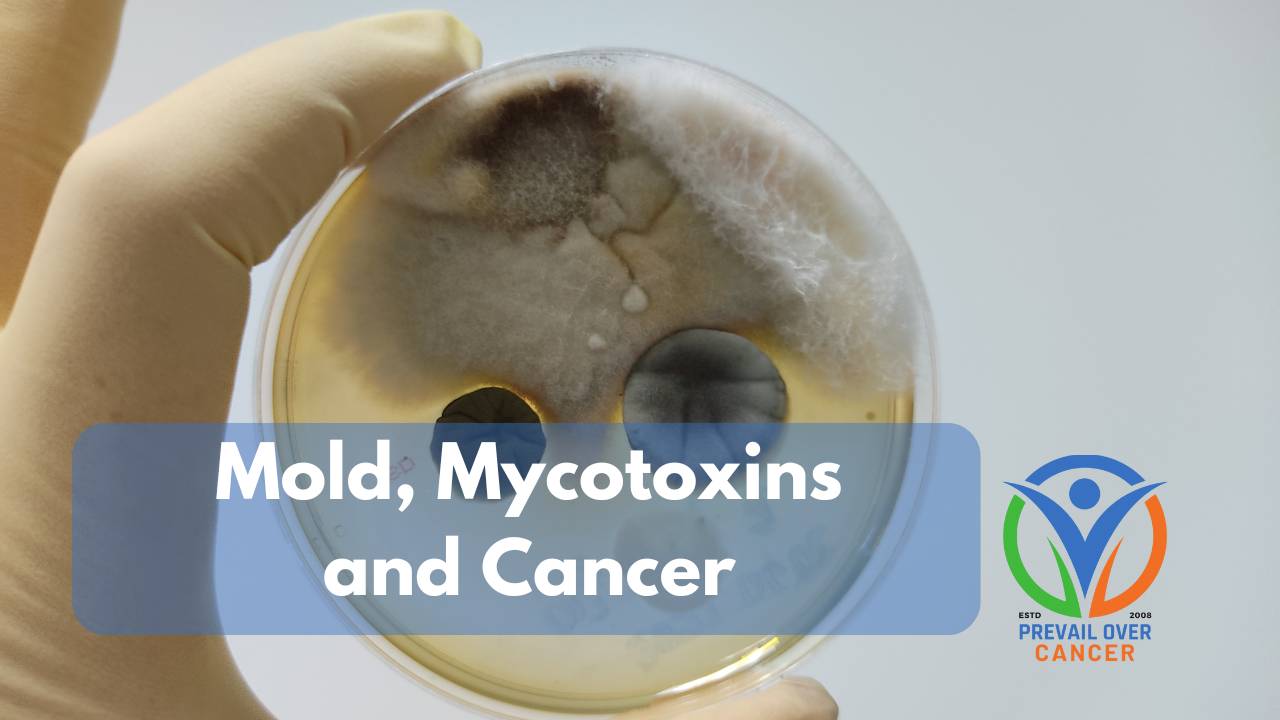
Mold, Mycotoxins, Liver Damage and Cancer Risk
Researched and written by Keith Bishop, Clinical Nutritionist, Cancer Coach, Retired Pharmacist, and Founder of Prevail Over Cancer.
Mold and fungus are more than just household nuisances — they may pose serious health risks, including contributing to cancer development. While not all mold exposure leads to disease, particular species produce mycotoxins, toxic compounds that have been linked to liver, kidney, and esophageal cancers. This Prevail Over Cancer blog post examines the science behind mold-related health risks, provides guidance on testing your environment and body, and offers actionable strategies to minimize exposure.
⚠️ Health Concerns Linked to Mold and Mycotoxins
Mold exposure can trigger:
- Respiratory issues: Asthma, sinusitis, chronic cough
- Neurological symptoms: Brain fog, memory loss, dizziness
- Immune dysfunction: Autoimmunity, frequent infections
- Hormonal imbalances: Fatigue, irregular cycles, blood sugar swings
- Skin i...
Oyster Mushrooms and Cancer
Oyster Mushrooms are A Functional Food Ally in the Fight Against Cancer
Researched and written by Keith Bishop, Clinical Nutritionist, Cancer Coach, Author, and Retired Pharmacist
When it comes to integrative cancer care, nature offers some remarkable tools, and one of the most promising is the oyster mushroom (Pleurotus ostreatus). More than just a savory culinary ingredient, oyster mushrooms are gaining traction in peer-reviewed studies for their anticancer, antioxidant, and immune-enhancing properties.
What Makes Oyster Mushrooms Unique?
Oyster mushrooms are rich in:
- β-glucans – immune-modulating polysaccharides[i]
- Ergothioneine – a potent antioxidant that accumulates in tissues under oxidative stress[ii]
- Phenolic compounds, lectins, and terpenoids – with documented anti-inflammatory and anticancer activity. Yes! Lectins have anticancer activity![iii]
Together, these bioactive molecules contribute to:
- Inhibiting tumor cell proliferation[iv]
- Enhancing the activity of ...
Red Light Therapy and Cancer: What the Science Really Says
Explore the research behind red light therapy, photobiomodulation (PBM), and near-infrared light (NIR), and their potential roles in cancer care—from pain relief to mitochondrial support.
Researched and written by Keith Bishop, Clinical Nutritionist, Cancer Coach, and Retired Pharmacist, and Founder of Prevail Over Cancer and Prevail Protocol
Introduction: What is Red Light Therapy?
Red light therapy (RLT), also known as Photobiomodulation (PBM) and Photodynamic Therapy (PDT), is a non-invasive treatment that uses low-wavelength red light or near-infrared light to stimulate cellular function. It’s gaining traction for its potential to support skin health, reduce inflammation, promote tissue repair, and alleviate neuropathy symptoms.[i]
RLT targets the mitochondria, the energy-producing centers of cells. When exposed to specific wavelengths (typically 600–850 nm), mitochondria absorb the light, stimulate mitochondrial cytochrome c oxidase, and produce more ATP (adenosine triphosphat...
Vitamin K2 and Cancer
Vitamin K2: A Powerful Ally in Cancer Prevention and Treatment
Researched and written by Keith Bishop, Clinical Nutritionist, Cancer Coach, and Retired Pharmacist
Vitamin K2 has been gaining attention for its potential role in cancer prevention and treatment. Research suggests that it may help regulate cell growth, induce apoptosis (programmed cell death), and enhance the effectiveness of conventional cancer therapies. In this blog post, we’ll explore the science behind Vitamin K2’s anti-cancer properties, its other health benefits, food and supplement sources, potential side effects, and interactions with cancer treatments.
What is Vitamin K2?
Vitamin K2 is a fat-soluble vitamin that plays a crucial role in calcium metabolism, cardiovascular health, and bone strength. It exists in several forms, including menaquinone-4 (MK-4) and menaquinone-7 (MK-7), which are the most studied for their health benefits.
MK-4 and MK-7 are both forms of Vitamin K2, but they differ in their b...
Methylene Blue: A Guide for People with Cancer
Methylene Blue: A Guide for People with Cancer
What is Methylene Blue?
Methylene Blue (MB), also known as methylthionine chloride, is a synthetic compound initially developed as a dye but later discovered to have various medical applications. It has been used in cancer therapy to treat methemoglobinemia and neurodegenerative diseases and as a cancer treatment photosensitizer.[i]
Where Does Methylene Blue Come From?
Methylene Blue was first synthesized in the late 19th century and has been widely used in medical and scientific research. It is derived from phenothiazine and exists in oxidized (blue) and reduced (colorless) forms.
Anticancer Activity of Methylene Blue
Recent studies suggest that Methylene Blue has potential anticancer properties.
Oral Use of Methylene Blue for Cancer
Methylene Blue has been investigated for its oral application in cancer treatment, particularly in managing painful oral mucositis caused by chemotherapy and radiation therapy. Some studies s...
The Anticancer Potential of Turkey Tail / Coriolus Versicolor Mushroom
Researched and written by Keith Bishop, Clinical Nutritionist, Cancer Coach, and Retired Pharmacist
Coriolus versicolor, or Turkey Tail, is a medicinal mushroom extensively studied for its potential anticancer properties. Used in traditional Chinese medicine for centuries, modern research has uncovered its ability to support immune function and complement conventional cancer treatments.
Alternative Names: Trametes versicolor, Polyporus versicolor, Polystictus versicolor, multicolored polypore mushroom
Common Names and Ingredients: PSK (protein-bound polysaccharide), PSP, VPS, Turkey Tail, Yun Zhi, Kawaratake, and Krestin.
Where Does Coriolus Versicolor Grow?
Coriolus versicolor is a saprotrophic fungus that grows on decaying hardwood trees worldwide. It is commonly found in Asia, Europe, and North America, thriving in moist, wooded environments. In China, it is often cultivated for medicinal use.
Active Ingredients
The key bioactive compounds in Coriolus versicolor include:
- P...
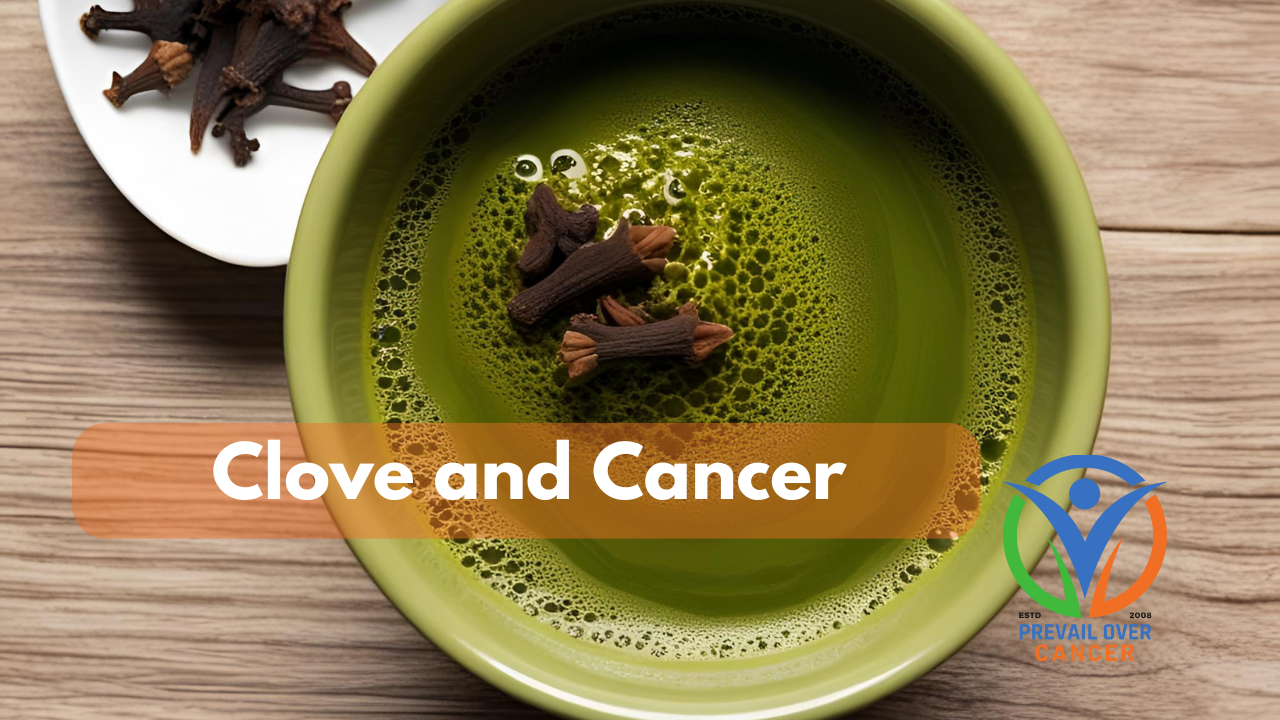
Clove and Cancer
Researched and written by Keith Bishop, Clinical Nutritionist, Cancer Coach, and Retired Pharmacist.
Cloves are the dried flower buds of the evergreen tree Syzygium aromaticum. They are commonly used as a cooking spice and have been used in traditional medicine for centuries.
Clove, a spice native to Indonesia's Maluku Islands, has been esteemed for centuries in traditional medicine systems such as Ayurveda and Traditional Chinese Medicine (TCM). Historically, it has been utilized to address many ailments, including dental pain, digestive issues, respiratory conditions, and reproductive health concerns. The therapeutic properties of clove are attributed mainly to its rich phytochemical composition, notably eugenol, eugenol acetate, and β-caryophyllene, which confer antimicrobial, anti-inflammatory, analgesic, and antioxidant effects.[i]
In traditional practices, cloves were commonly employed to alleviate toothaches and oral infections, owing to their potent analgesic and antis...
Iodine and Cancer
A Comprehensive Review of the anti-cancer actions of iodine.
Researched and written by Keith Bishop, clinical nutritionist, cancer coach, and retired pharmacist.
Iodine, an essential trace element, has garnered significant attention for its potential anticancer properties. This blog post delves into iodine's anticancer activity, its mechanisms, other health benefits, cancers at higher risk due to deficiency, interactions with medications, top food sources, potential side effects of excess iodine, testing methods, and supplement sources.
Consult your health care team before making changes to your health program.
Anticancer Activity of Iodine
Research has shown that iodine exhibits significant anticancer effects, particularly in breast cancer. Molecular iodine has been found to diminish proliferation and invasive potential and activate the immune response in mammary cancer xenografts. Iodine induces apoptosis (programmed cell death) and inhibits angiogenesis (formation of new blo...
D-Mannose and Cancer – Research Review
Researched and written by Keith Bishop, Cancer Coach, Clinical Nutritionist, Retired Pharmacist
D-mannose, a simple sugar, has been studied for its potential anti-cancer actions. Below, we explore its mechanisms, effects on cancer treatments, and considerations for its use based on scientific research. Mannose cancer research is in the early stages and is limited to laboratory cancer cell studies, a few animal studies, and even fewer human studies.
The Warburg Cancer Effect and D-Mannose
The Warburg effect is a phenomenon in which cancer cells rely heavily on glycolysis (glucose) for energy production, even in the presence of oxygen. Research indicates that D-mannose can disrupt glycolysis, affecting the Warburg effect and reducing cancer cell proliferation. A study published in Nature Nature link shows how D-mannose interferes with glucose metabolism, impairing tumor growth.
D-Mannose's Impact on Glucose Metabolism in Cancer
D-mannose alters glucose metabolism by inhibiting path...
Gut Microbiome Probiotics: A Hidden Ally in the Fight Against Cancer
Researched and written by Keith Bishop, Clinical Nutritionist, Cancer Coach, and Retired Pharmacist
My wife and I come from families with histories of cancer and dementia, and I was personally diagnosed with rheumatoid arthritis. As a teenager with acne, I took powerful antibiotics for years that contributed to loose stools. As I shifted my focus from traditional pharmacy to natural health and cancer support, I uncovered the crucial role of digestive health in tackling these health challenges. Since prioritizing my gut health, I’ve experienced a significant reduction in autoimmune aches and pains and tested negative for rheumatoid arthritis, transforming my overall well-being.
The gut microbiome, a vast ecosystem of trillions of microorganisms in our digestive tract, is emerging as a key player in cancer, health, and disease. Its influence extends beyond digestion, impacting immune function, mental health, and cancer prevention and treatment. Here's how this microscopic community can...
Author

Keith Bishop
Clinical Nutritionist, Cancer Coach, Retired Pharmacist, Author
Keith Bishop founded Prevail Over Cancer and is a passionate advocate for cancer awareness and research. With a background in pharmacy and clinical nutrition I’m dedicated to providing insightful and empowering information to help clients, survivors, and caregivers navigate their journey. From personal experiences and a commitment to holistic health, Keith aims to inspire and support the cancer community through comprehensive and accessible content.
Join over 8,000 subscribers!
Get access to Keith's Prevail Over Cancer Newsletter with news, blogs, and updates!
Recent Posts
Blog Post Topics
All Categories- microbiome modulation in oncology
25 hydroxyvitamin d cancer prevention
active hexose correlated compound
akkermansia and chemotherapy synergy
akkermansia and gastric cancer
akkermansia and radiation therapy
akkermansia muciniphila and cancer